

Allowable Self-Employed Expenses A Complete Guidance for Ireland
Running your own business in Ireland comes with plenty of responsibilities — from finding clients to managing your own tax returns. One of the most important aspects of staying profitable is understanding allowable self-employed expenses Ireland and how they can reduce your tax bill. This comprehensive self-employed expense guidance explains exactly what you can claim, from home office expenses self-employed Ireland rules to allowable vehicle expenses self-employed Ireland.
Why Understanding Allowable Expenses Matters
When you’re self-employed, every euro counts. Claiming legitimate expenses means you only pay tax on your actual profits, not on money you’ve spent running your business. Whether you’re researching the self-assessment expenses list Ireland or exploring the pre-trading expenses Ireland guide, accurate record-keeping ensures you stay compliant while maximising relief.
Home Office Costs
If you work from home, certain running costs can be claimed as home office expenses self-employed Ireland. This may include heating, lighting, and claiming broadband phone costs Ireland self-employed. Revenue typically allows you to claim a reasonable percentage based on the portion of your home used for business.
Business Travel
For those regularly on the road, allowable business travel expenses Ireland cover costs such as mileage, public transport, and overnight accommodation. Just ensure you keep detailed logs and receipts to support your claims.
Professional Fees & Services
Professional costs, including accountants, consultants, and solicitors, can fall under allowable self-employed professional fees Ireland. Even the cost of self-employed bookkeeping software tax relief Ireland qualifies if it’s used solely for business.
Advertising & Marketing
Promoting your services through ads, printing flyers, or running online campaigns is considered advertising expenses tax deductible Ireland. This helps grow your business and reduces your taxable income at the same time.
Rent, Rates & Utilities
Office rent, local authority charges, and utilities may be claimed as allowable rent rates power expense Ireland, provided they’re directly related to business use.
Pension Contributions
Contributing to a retirement fund is not only good for your future but can also reduce your current tax bill. Self-employed pension contributions Ireland are eligible for tax relief within certain limits.
Vehicle Costs
If you use a car or van for business purposes, you can claim allowable vehicle expenses self-employed Ireland — from fuel and maintenance to insurance. Keep mileage records to separate business and personal use.
Insurance Premiums
Policies like public liability, professional indemnity, or business property cover may be claimed as self-employed insurance expenses Ireland.
Capital Allowances
Large purchases such as machinery, computers, or furniture are claimed over time through capital allowances self-employed Ireland, spreading the cost for tax purposes.
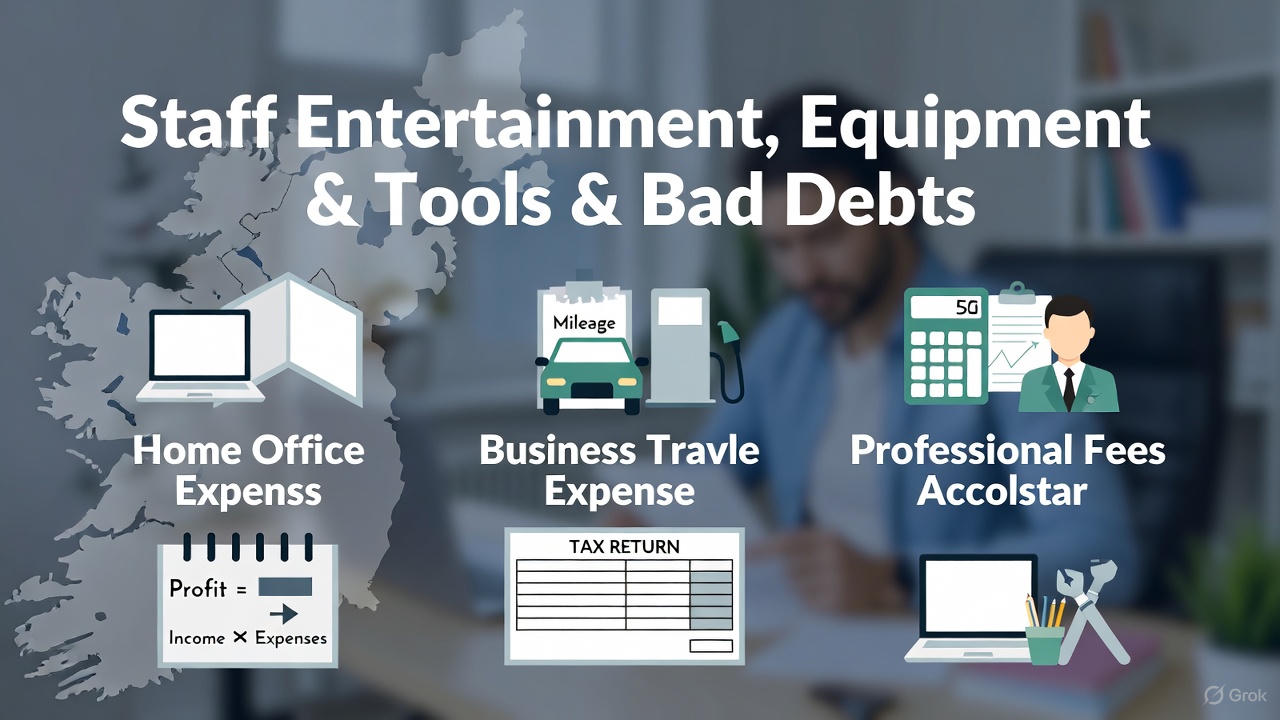
Staff Entertainment
If you have employees, modest staff functions or meals are considered allowable staff entertainment expenses Ireland, as long as they’re reasonable and well-documented.
Equipment & Tools
Purchasing work-related tools or technology falls under allowable equipment and tools expenses Ireland, whether it’s a laptop for a designer or power tools for a tradesperson.
Bad Debts
In certain cases, unpaid customer invoices can be claimed as allowable self-employed bad debts Ireland, helping to offset losses.
Record-Keeping & Simplified Claiming
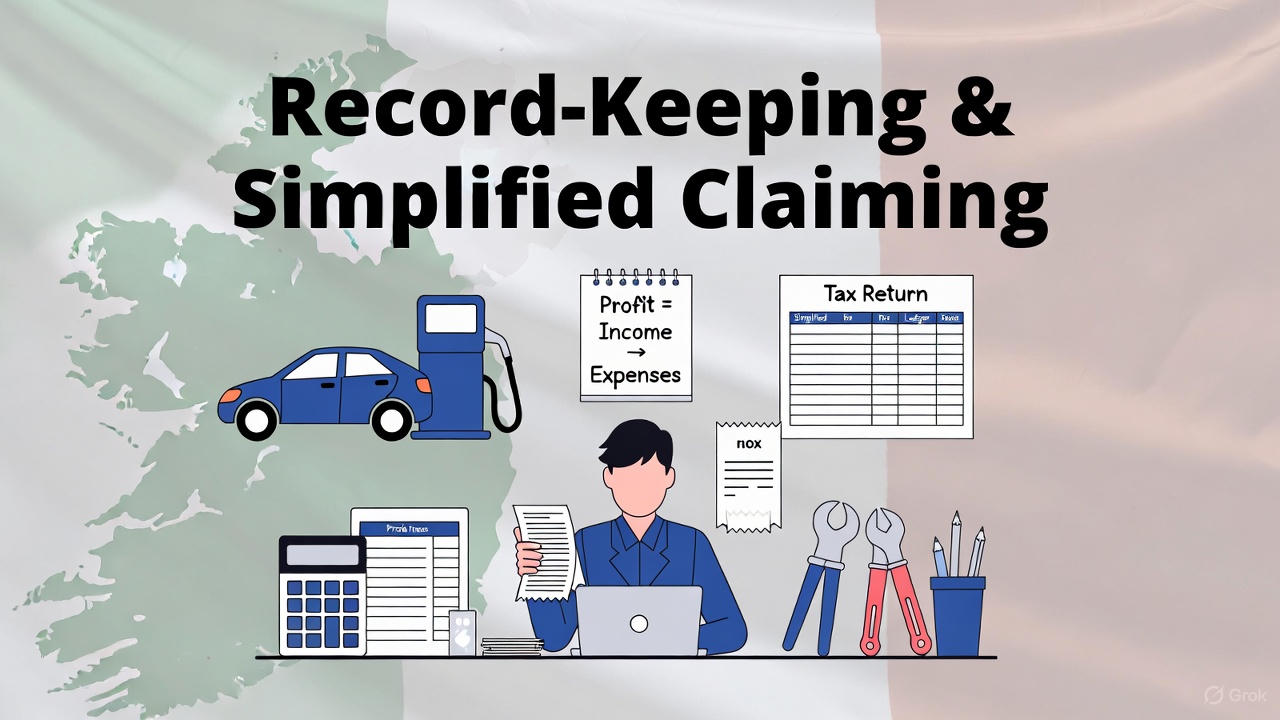
Good documentation is key. Keep invoices, receipts, and bank statements as self-employed paperwork and receipts Ireland are vital during Revenue checks. If your expenses are small and predictable, you might qualify for simplified expenses self-employed Ireland, allowing you to claim a flat rate instead of calculating every individual cost.
Allowable Self-Employed Expenses in Ireland – A Practical Guidance
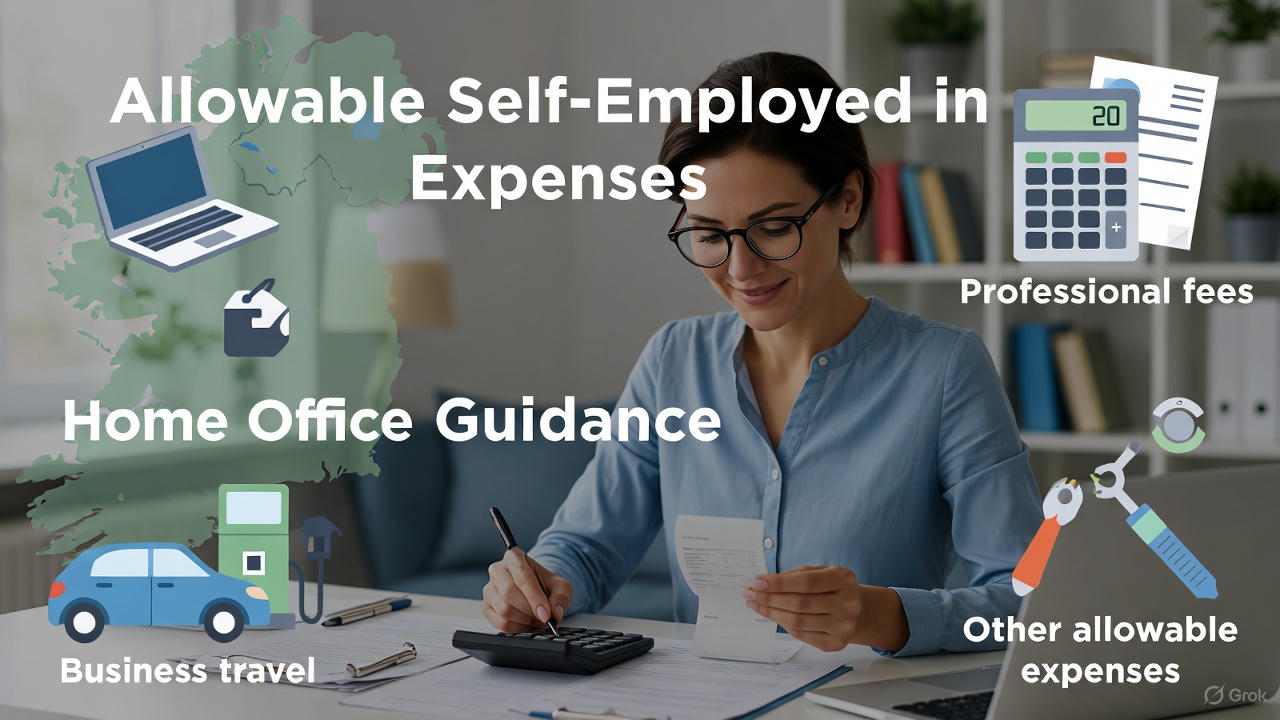
Whether you’re a freelance journalist, self-employed plumber, or physiotherapist, running your own business in Ireland means managing both income and costs. These costs — known as allowable self-employed expenses Ireland — are the everyday expenditures you can deduct when calculating your taxable profits. Revenue has clear rules on what counts, so accurate self-employed expense guidance is essential to avoid mistakes and maximise relief.
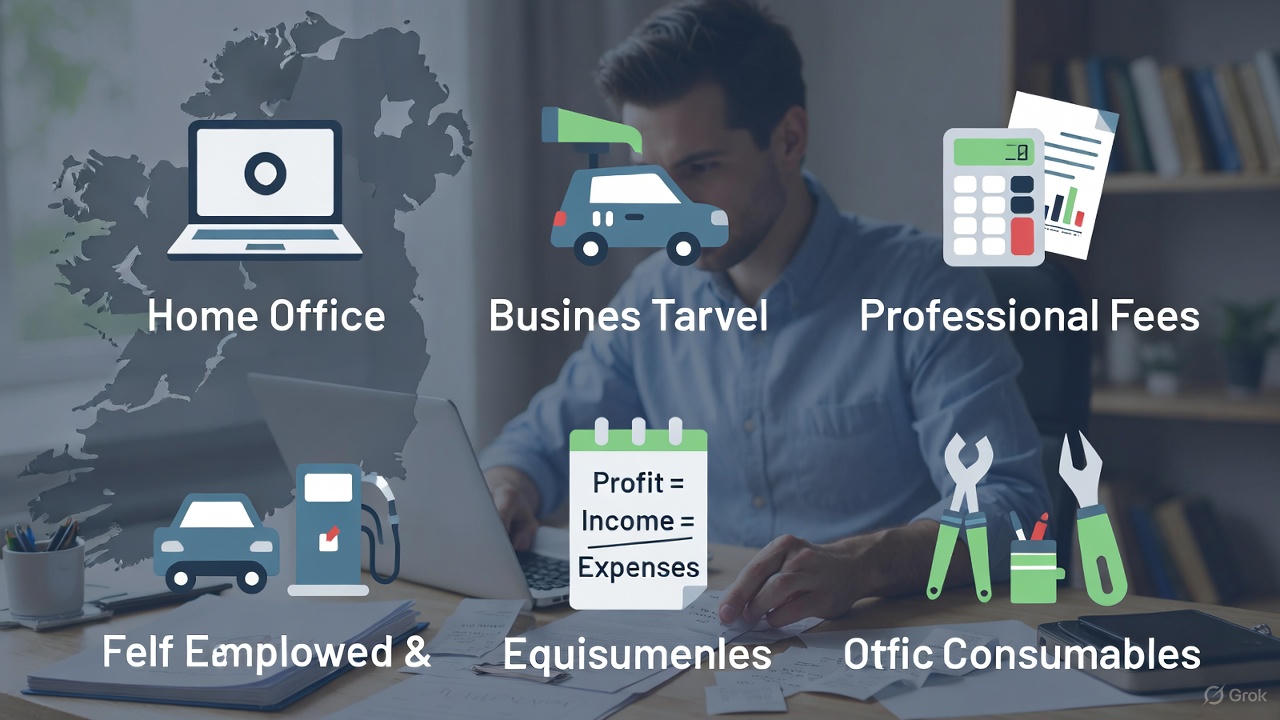
When preparing your self-assessment expenses list Ireland, your profits are calculated as your total income minus allowable expenses. The lower your taxable profits, the lower your tax bill. If you’re not VAT registered, you can deduct the full cost of eligible expenses, including VAT.
What Counts as Allowable Expenses?
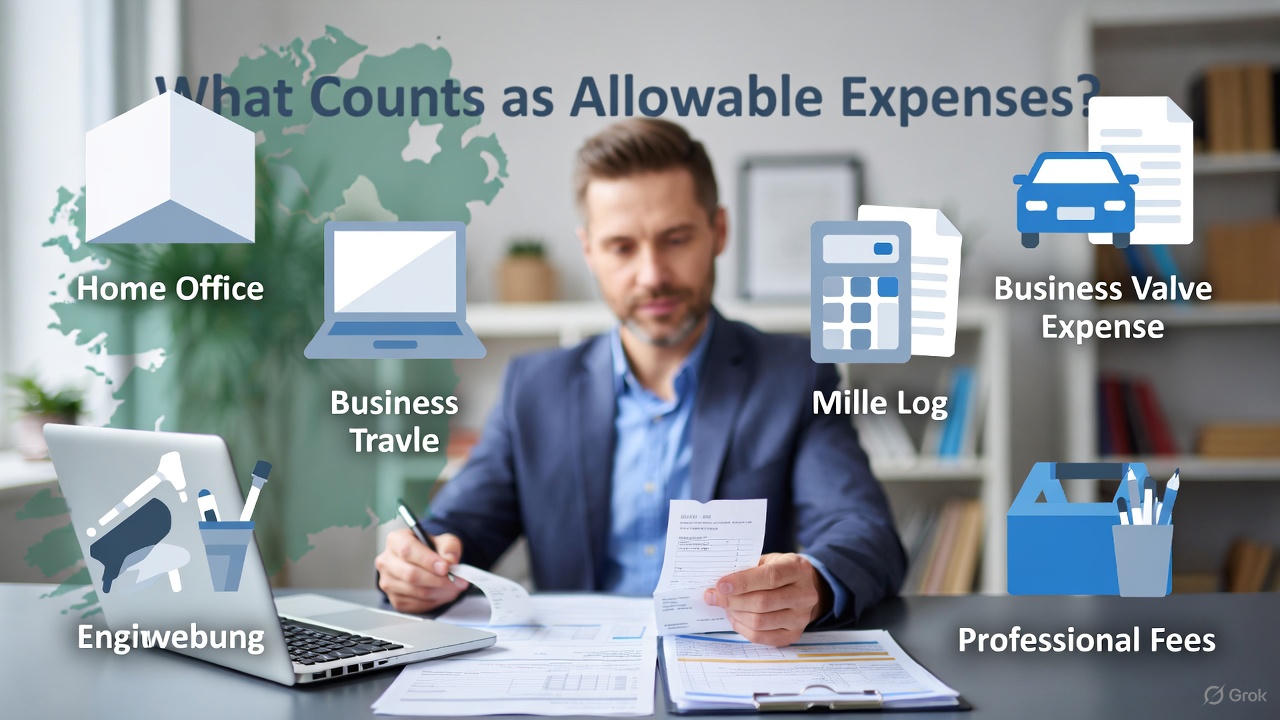
Allowable expenses cover a wide range of costs that keep your business running — from home office expenses self-employed Ireland like heating and electricity to allowable business travel expenses Ireland such as mileage or public transport for work purposes.
Capital Items and Pre-Trading Costs
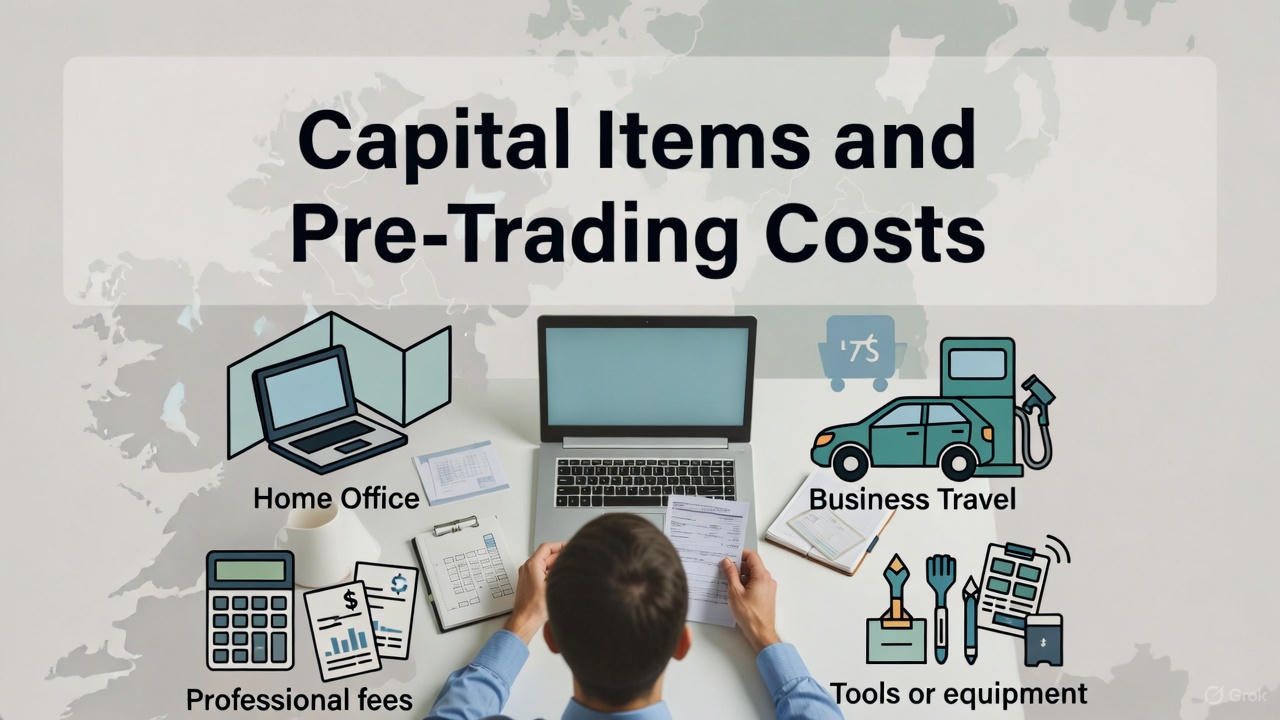
Capital purchases — such as vans, property, or large equipment — aren’t treated as regular expenses but may qualify for capital allowances self-employed Ireland. These allow you to claim tax relief over time, reducing taxable income. If you spent money before officially starting your business, check the pre-trading expenses Ireland guide to see if you can still claim them.
By understanding allowable deductions — from advertising expenses tax deductible Ireland to simplified expenses self-employed Ireland — you’ll pay only what’s fair, keep your business financially healthy, and stay on the right side of Revenue.
Keeping a Record of Your Self-Assessment in Ireland
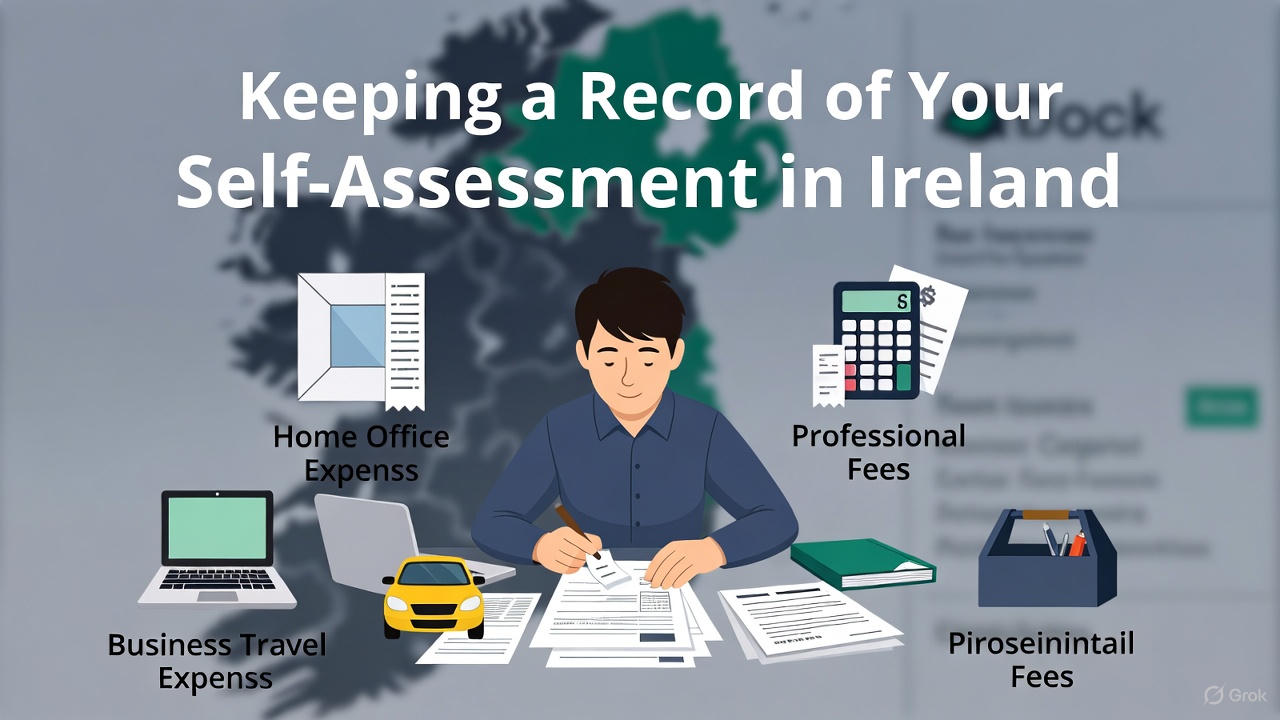
Accurate self-employed paperwork and receipts Ireland are essential for staying compliant and maximising your allowable self-employed expenses Ireland. Maintaining up-to-date records makes completing your tax return simpler and ensures you can easily prove claims for items like home office expenses self-employed Ireland, allowable vehicle expenses self-employed Ireland, and advertising expenses tax deductible Ireland.
If you fail to keep adequate records or submit your return late, you may face penalties from Revenue. Good record-keeping also helps you make the most of reliefs such as simplified expenses self-employed Ireland and capital allowances self-employed Ireland without stress at filing time.
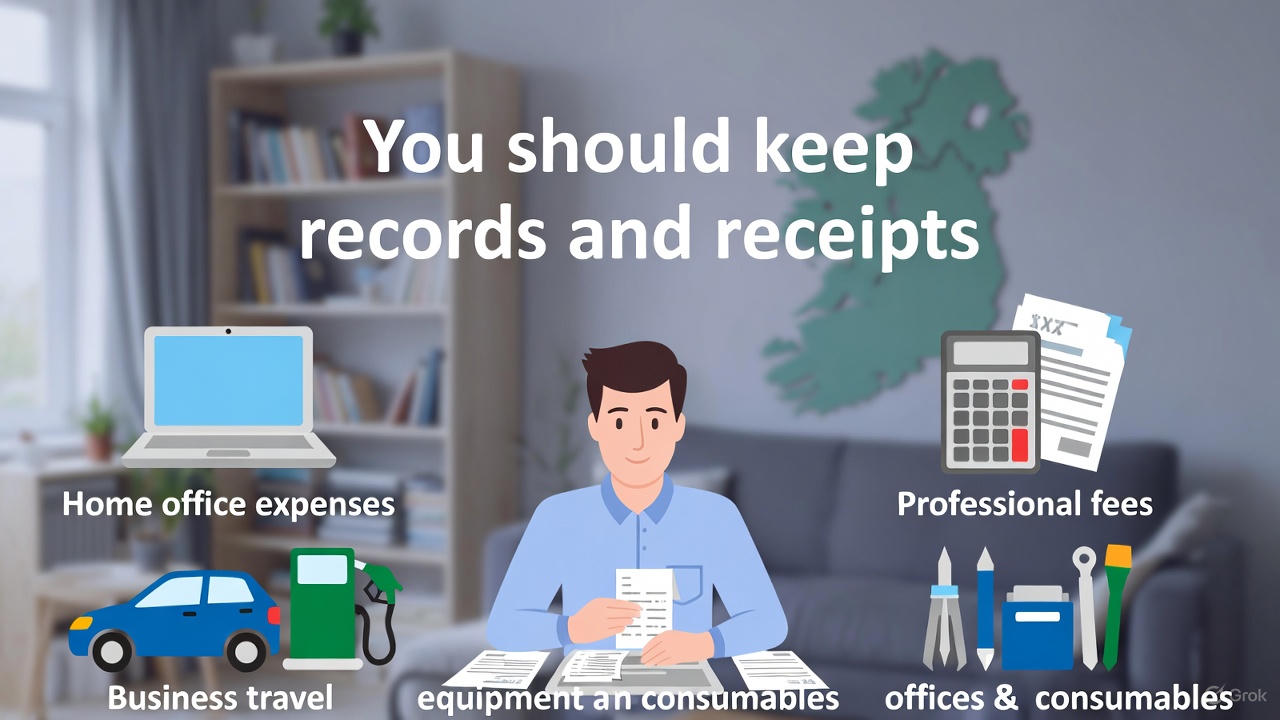
You should keep records and receipts
- Cash registers and sales logs
- Invoicing and client payment details
- Records of mileage for allowable business travel expenses Ireland
- Bank statements showing business transactions
- Receipts for purchases, including allowable equipment and tools expenses Ireland
By keeping these documents safe and organised, you’ll have solid evidence to support your claims — whether you’re claiming broadband phone costs Ireland self-employed, recording self-employed insurance expenses Ireland, or tracking allowable self-employed professional fees Ireland. This habit not only keeps Revenue happy but also ensures your business claims are maximised every year.
Allowable Self-Employed Expenses for Completing Your 2020 Tax Return
For the 2020 tax year, the self-assessment expenses list Ireland had to be submitted by October 31, 2021. Understanding and claiming your allowable self-employed expenses Ireland is crucial in calculating how much tax you owe. These deductions — from home office expenses self-employed Ireland to allowable vehicle expenses self-employed Ireland — can significantly reduce your taxable income.
During this period, the government also introduced financial support for businesses impacted by the coronavirus, alongside existing reliefs like self-employed pension contributions Ireland, advertising expenses tax deductible Ireland, and capital allowances self-employed Ireland. If your business was struggling, proper self-employed expense guidance ensured you claimed every eligible cost, including pre-trading expenses Ireland guide items and allowable rent rates power expense Ireland.
By keeping accurate self-employed paperwork and receipts Ireland and applying these deductions correctly, you could minimise your tax liability while staying compliant with Revenue.
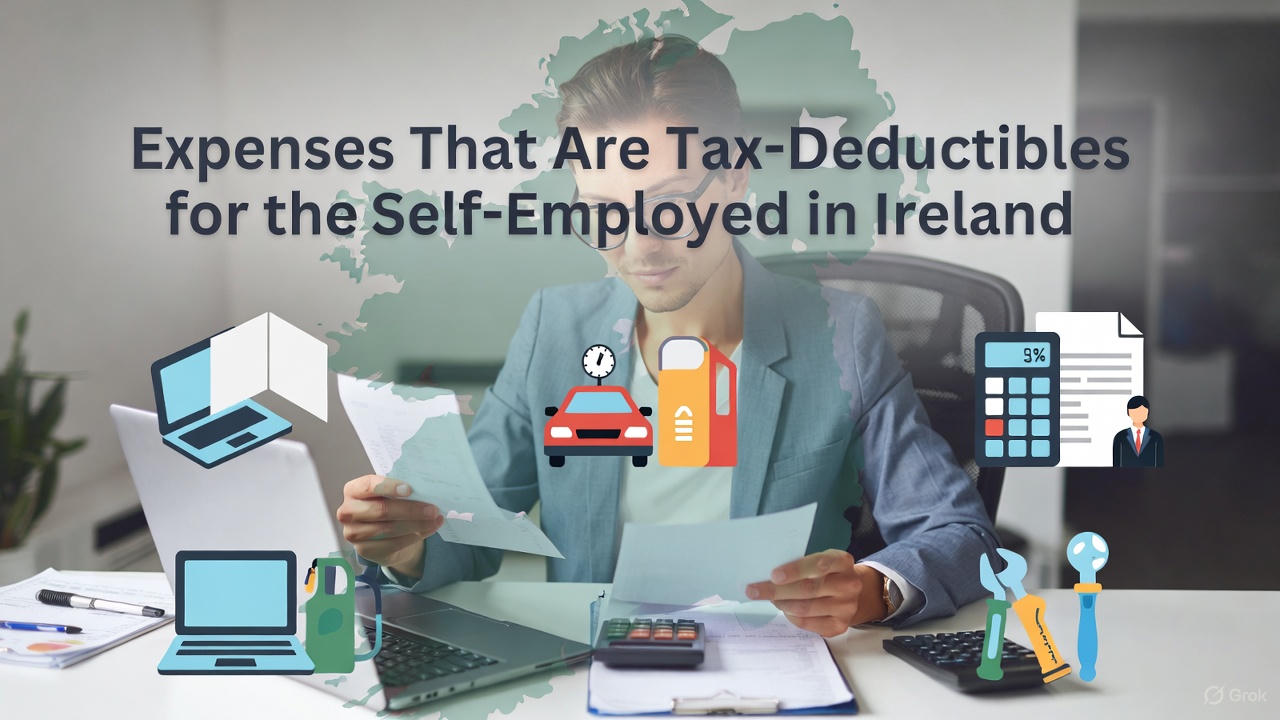
Expenses That Are Tax-Deductible for the Self-Employed in Ireland
In most cases, it’s straightforward to identify whether a cost qualifies as an allowable self-employed expense Ireland. If the expense was wholly for business purposes and you have self-employed paperwork and receipts Ireland to prove it, you can generally claim it as part of your self-assessment expenses list Ireland.
For newly established businesses, it’s common to work from home and use existing personal assets for work — such as a car for allowable business travel expenses Ireland or a mobile phone for claiming broadband phone costs Ireland self-employed. While this can save money, it introduces the issue of ‘duality of purpose’, where an item or service is used for both personal and business reasons.
In these cases, it’s essential to clearly separate business and personal usage. For example:
- If you use your personal vehicle for work, only business mileage can be claimed under allowable vehicle expenses self-employed Ireland.
- If you use your home as an office, only the portion directly related to business qualifies as home office expenses self-employed Ireland.
- Existing tools or devices must be allocated correctly under allowable equipment and tools expenses Ireland.
To help you avoid confusion — and ensure you’re maximising your self-employed expense guidance claims — we’ve broken down these costs in detail below.
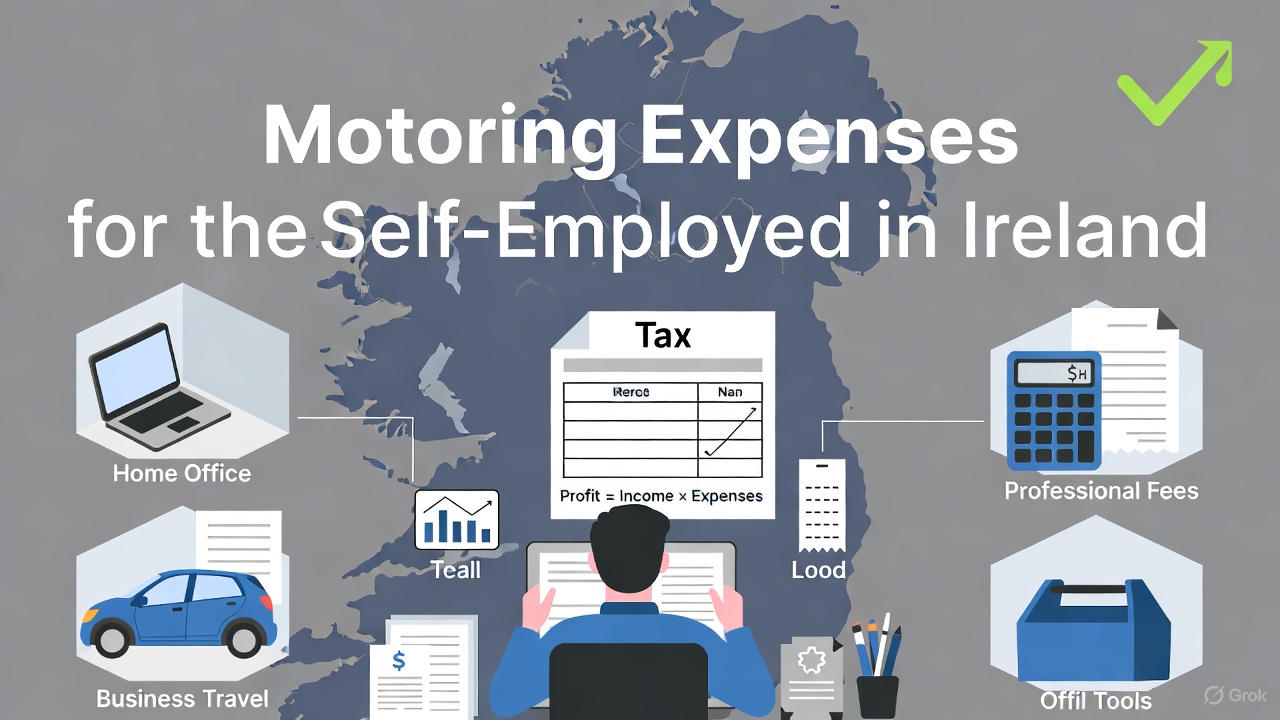
Motoring Expenses for the Self-Employed in Ireland
If you use a vehicle for both business and personal purposes, you can still claim a portion of your allowable vehicle expenses self-employed Ireland. This includes operating costs such as fuel, oil, servicing, repairs, and insurance. The amount you can deduct depends on the ratio of your business mileage to your total mileage.
To work out the correct deduction, it’s essential to keep a detailed mileage log for every business journey, along with self-employed paperwork and receipts Ireland for all related costs. These records ensure your claim meets Revenue’s rules for allowable business travel expenses Ireland.
Alternatively, you may use Revenue’s mileage rates, which are designed to cover the average running and maintenance costs of a vehicle — from fuel and oil to servicing, repairs, and insurance. This simplified method can make expense tracking easier while still allowing you to claim your eligible motoring costs under self-employed expense guidance.
What Constitutes Business Mileage for the Self-Employed in Ireland?
When calculating allowable business travel expenses Ireland, it’s important to know what counts as genuine business mileage. If you own or rent a separate business premises, the cost of travel between your home and that location is considered ordinary commuting and is not tax-deductible.
However, travel between your business location and other places where work is carried out — such as visiting clients, suppliers, or job sites — is classed as business mileage and can be claimed under allowable vehicle expenses self-employed Ireland.
To support your claim, keep accurate logs of all qualifying journeys, along with self-employed paperwork and receipts Ireland for associated costs like fuel, servicing, and tolls. This ensures you meet Revenue’s requirements while making the most of your self-employed expense guidance.
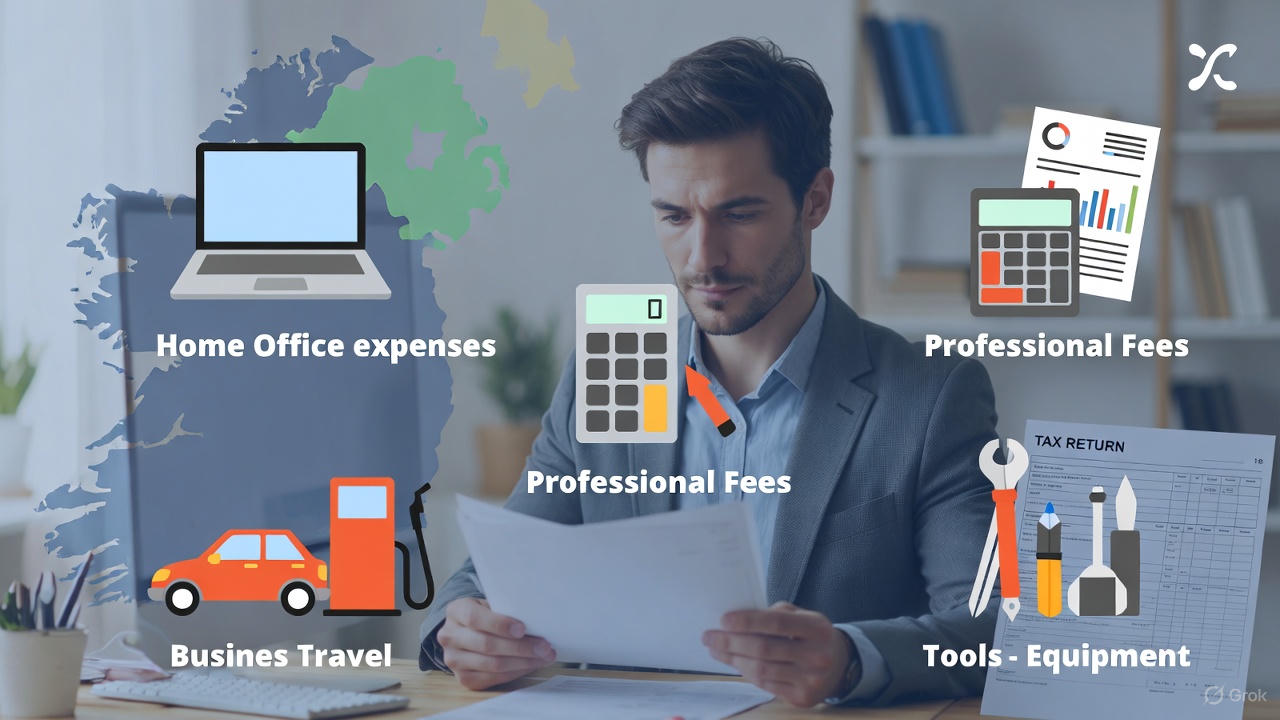
Using Your Home as an Office – Allowable Self-Employed Expenses in Ireland
If you work from home, you may be able to claim home office expenses self-employed Ireland for the additional costs of running your business there. This typically includes light, heat, and a share of other household running costs. The key is that the portion of your home must be used for business purposes during that time — for example, creating invoices, meeting clients online, or doing administrative work.
If the same space is also used for non-business purposes, such as watching TV, it may not qualify for a deduction under self-employed expense guidance. However, if you use a portion of your home exclusively for business for a certain period, you can deduct the related costs for that timeframe.
You cannot deduct the cost of buying or building your home office space, but you can claim a percentage of your household utility bills, internet, and even claiming broadband phone costs Ireland self-employed. The amount you can deduct depends on:
- How much of your home is used for business purposes
- How long in the month that space is used for work
By applying these rules correctly, you can ensure you’re maximising your allowable self-employed expenses Ireland while staying compliant with Revenue.
Expenses That Are Not Permitted for the Self-Employed in Ireland
While there are many allowable self-employed expenses Ireland you can claim, Revenue also has strict rules about costs that do not qualify. Certain expenses are disallowed for tax purposes, even if they seem directly related to generating income.
For example, entertaining clients — such as taking them out for meals or events — is not permitted, even if it results in new business. Similarly, personal expenditure is never deductible under self-employed expense guidance, meaning you cannot claim tax relief for purely personal purchases or services.
Disallowed expenses include, but are not limited to:
- Client entertainment costs
- Personal lifestyle expenses
- Any non-business-related travel or items
When preparing your self-assessment expenses list Ireland, it’s essential to separate these disallowed costs from your legitimate business deductions, such as allowable business travel expenses Ireland, home office expenses self-employed Ireland, or capital allowances self-employed Ireland. Clear and accurate self-employed paperwork and receipts Ireland will help you maintain compliance and avoid penalties.
Clothing for Personal Use – Not an Allowable Expense
When it comes to allowable self-employed expenses Ireland, clothing for personal use is generally not deductible. Non-work clothing — anything other than a specific uniform or protective gear — cannot be claimed, even if you wear it while working.
This rule applies even if a professional body enforces a particular dress code. For example, suits, shirts, or shoes that could also be worn outside of work are treated as personal expenditure and are therefore excluded from your self-assessment expenses list Ireland.
Only genuine work-specific clothing, such as branded uniforms, safety boots, or protective equipment, can qualify under allowable equipment and tools expenses Ireland. Clear self-employed expense guidance and accurate self-employed paperwork and receipts Ireland will ensure you claim correctly and avoid including disallowed costs in your tax return.
Food and Beverage – Not an Allowable Self-Employed Expense
Under Revenue’s rules for allowable self-employed expenses Ireland, food and beverage costs are generally not deductible. The reason is simple — everyone needs to eat to live, so these expenses are considered personal rather than business-related.
Even if your job is physically demanding and causes you to eat more, or if the food at your workplace is more expensive than usual, these costs remain disallowed. They cannot be included in your self-assessment expenses list Ireland and are excluded from self-employed expense guidance for tax relief.
The only exception is where food and drink are provided as part of allowable staff entertainment expenses Ireland for employees or when incurred during overnight business travel that qualifies under allowable business travel expenses Ireland. In those specific situations, clear self-employed paperwork and receipts Ireland are essential to support your claim.
Accommodation – When It’s Allowable and When It’s Not
In most cases, domestic accommodation costs are not considered allowable self-employed expenses Ireland. Where you live is a personal choice, so rent or mortgage payments for your home cannot be claimed, even if living closer to your business allows you to work longer hours.
However, accommodation can be deductible when it forms part of legitimate allowable business travel expenses Ireland. For example, if a business trip requires you to spend one or more nights away from home, hotel stays and associated costs (such as breakfast or parking) may qualify, provided they are fully business-related and supported by proper self-employed paperwork and receipts Ireland.
To ensure compliance, only claim accommodation that directly relates to your business activity and avoid including any personal stays in your self-assessment expenses list Ireland. Following self-employed expense guidance will help you stay within Revenue’s rules while maximising your legitimate deductions.
Contact Us
Office Address
Unit 80, Cherry Orchard Business Park, D10NX96, Dublin 10, Ireland
Working Hours
Monday to Friday: 0800 hours – 1700 hours
Saturday & Sunday: Closed
Email or Call Us
Email: moh@tasconsulting.ie
Mobile: +353 85 1477625
Our Services
We offer a wide range of accounting-related services of unrivalled quality and dependability. We believe that each customer should be treated as an individual with distinct needs and requirements. TAS provides each customer with customised and tailored solutions in the following areas: