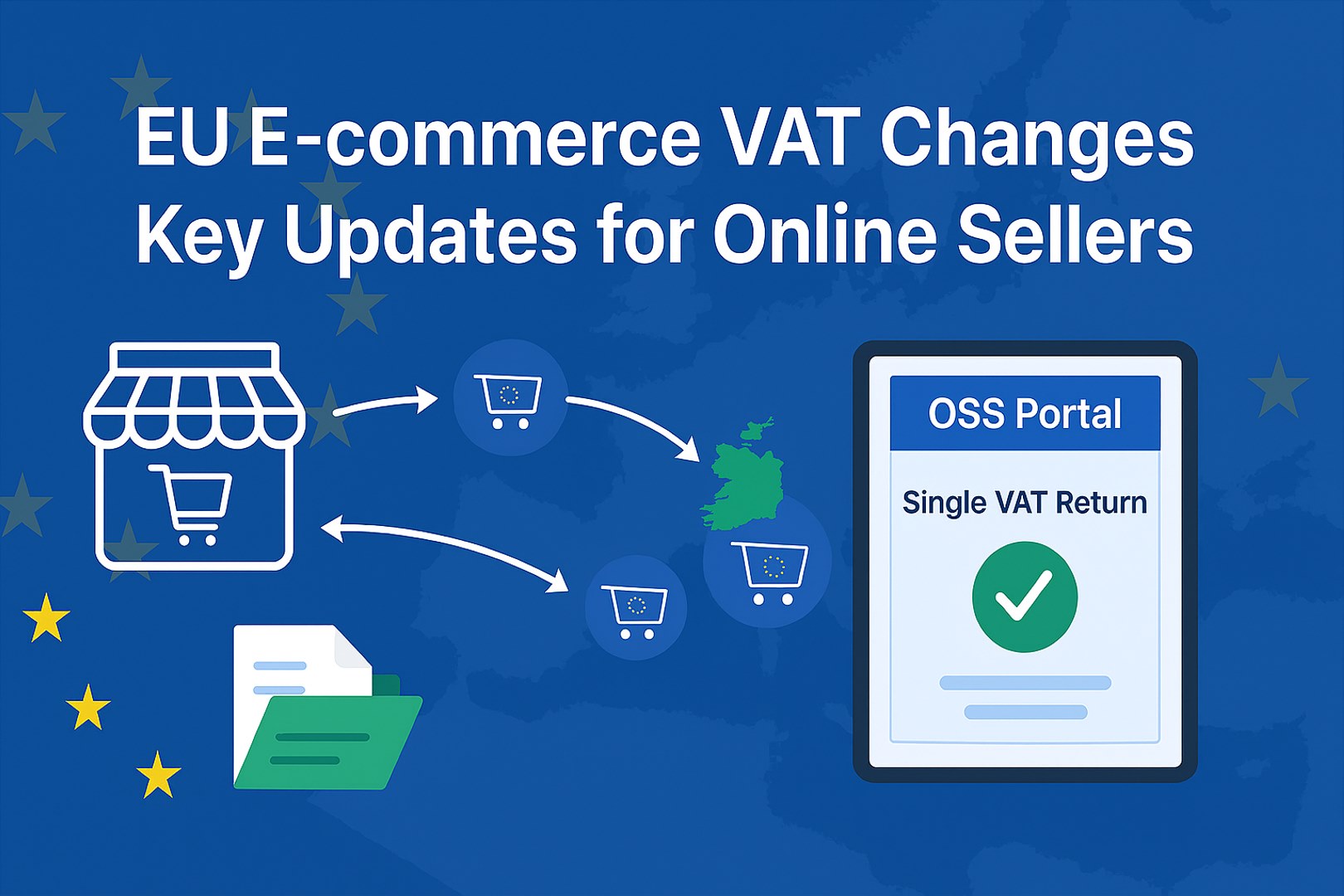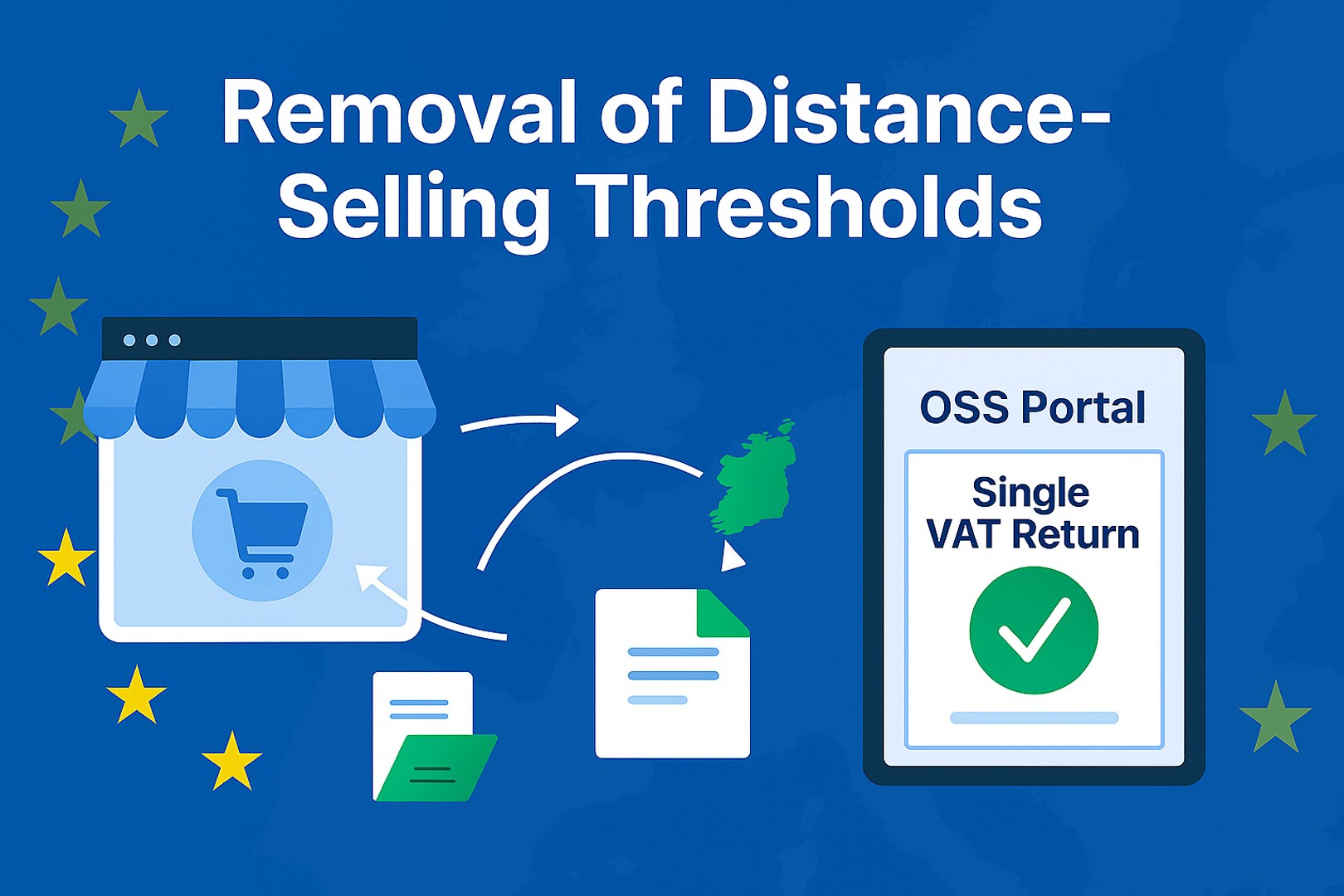
The landscape of EU e-commerce VAT changes has shifted significantly, impacting both EU and non-EU online sellers. Understanding these updates is crucial for businesses of all sizes to remain compliant and avoid penalties.
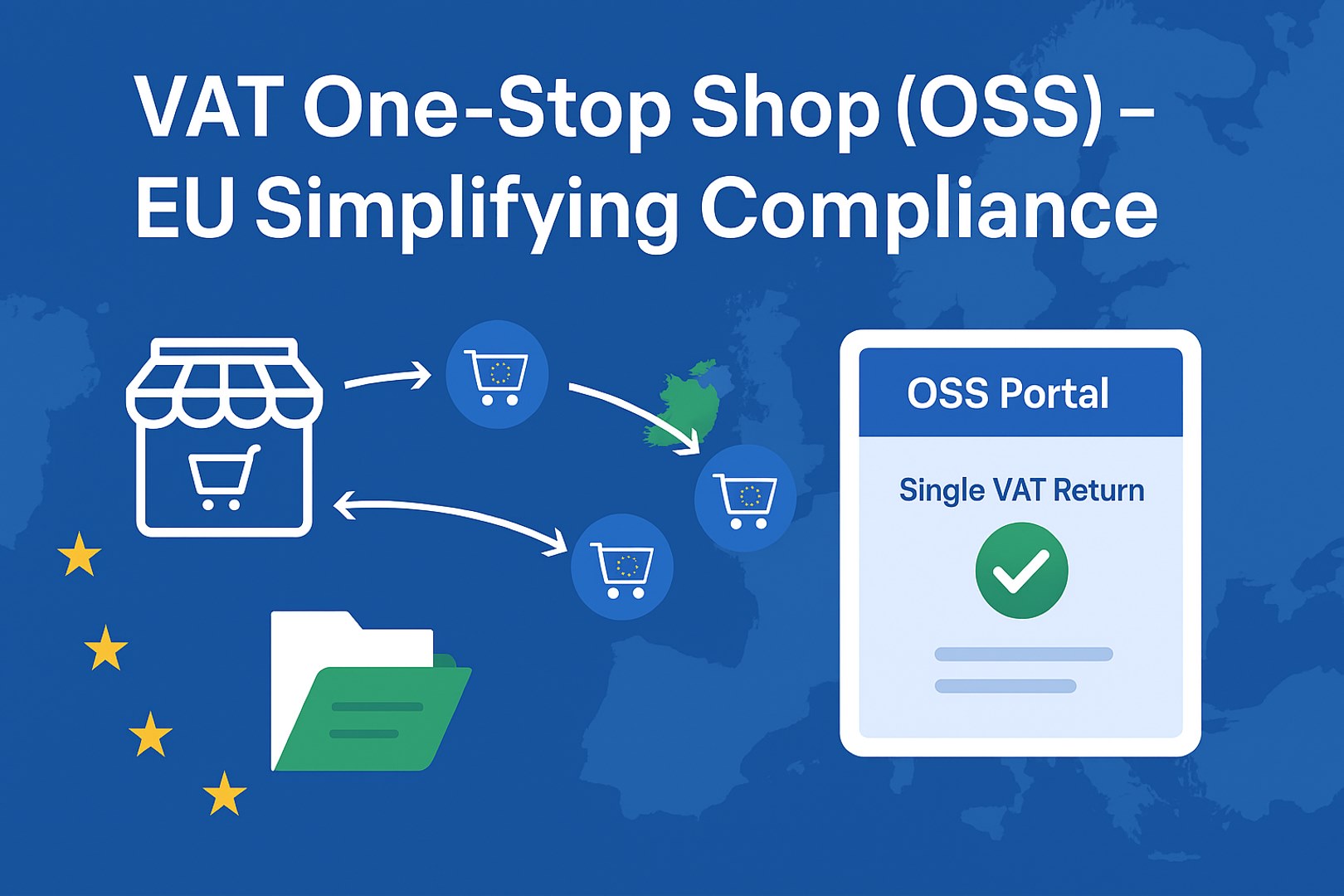
The VAT One Stop Shop (OSS) EU system replaces the old VAT MOSS scheme, streamlining EU VAT reporting obligations for distance selling. Sellers can now register online for a single EU VAT number, allowing them to report all EU VAT on B2C sales in one place. This is particularly useful for small businesses looking to expand across EU borders.
From 2025, new EU VAT thresholds 2025 apply to cross-border online sales. This change affects both EU VAT for online sellers and non-EU sellers delivering goods to EU consumers. Understanding the EU distance selling VAT rules is essential for determining when VAT must be collected and reported.
Non-EU sellers are now required to comply with EU VAT for non-EU sellers regulations, including VAT on imported goods. The rules for EU VAT on imported goods ensure proper taxation of products shipped from outside the EU, maintaining fairness for EU-based sellers.


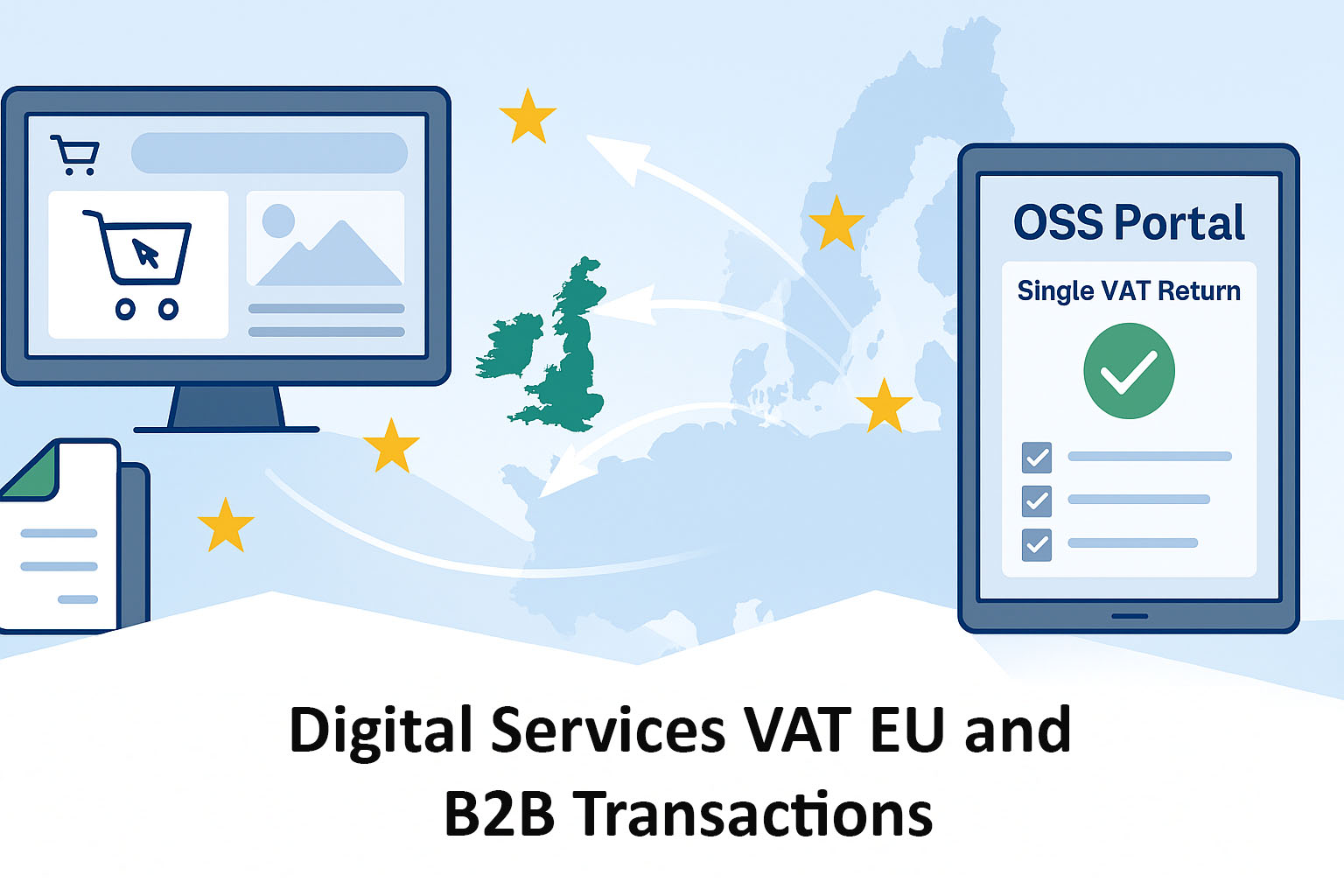
Providers of digital services must comply with Digital services VAT EU requirements. Meanwhile, EU VAT on B2B sales remains governed by established invoicing and reporting rules, which differ from B2C VAT obligations. Adhering to EU VAT invoicing requirements and EU VAT reporting obligations ensures smooth business operations.
Marketplaces are responsible for EU marketplace VAT rules, including collecting VAT on behalf of sellers in certain circumstances. Sellers must also account for EU VAT on shipping and delivery to ensure full compliance.
Maintaining EU VAT compliance e-commerce is critical to avoid EU VAT penalties and fines. Proper registration, invoicing, and reporting protect businesses and build trust with customers. Additionally, understanding EU VAT for small businesses and leveraging the OSS system can simplify cross-border VAT obligations.
Book an appointment with our VAT specialists to ensure your e-commerce business remains fully compliant across the EU.


On July 1, 2021, the rules for EU e-commerce VAT changes came into effect, transforming how online sales from businesses worldwide to EU consumers (B2C) are taxed. These changes simplify compliance for both EU-based and non-EU sellers.
Businesses outside the EU, including those in the UK, can now take advantage of the updated EU VAT for non-EU sellers regulations. By understanding the new requirements, international sellers can properly manage EU VAT on imported goods, EU distance selling VAT, and ensure full EU VAT compliance e-commerce.
The VAT One Stop Shop (OSS) EU and Import One Stop Shop (IOSS) are the two core elements of the EU VAT E-commerce Package. OSS allows sellers to report all EU B2C sales VAT via a single registration, while IOSS simplifies VAT collection on imported goods for businesses shipping to EU consumers. Both systems replace the old EU VAT MOSS replacement scheme, providing a more streamlined approach to EU VAT reporting obligations.
By leveraging the OSS and IOSS systems, online sellers can simplify EU VAT on B2C sales, EU VAT on shipping and delivery, and EU VAT for small businesses compliance while staying ahead of regulatory changes.
Book an appointment with our VAT experts to ensure your e-commerce business remains fully compliant with the latest EU VAT rules.


The EU VAT e-commerce changes are designed to simplify cross-border online selling within the European Union, making it easier for businesses to sell directly to consumers across national borders. By streamlining VAT procedures, the EU aims to facilitate trade while ensuring proper tax compliance.
Sellers familiar with the Mini One-Stop-Shop (MOSS) for digital services will recognize the advantages of VAT simplification. The new measures broaden the scope of MOSS, now replaced by the VAT One Stop Shop (OSS) EU system, to include a wider range of services and goods—including EU VAT on imported goods. This makes VAT management simpler for EU cross-border e-commerce VAT transactions.
It’s important to note that neither OSS nor the Import One Stop Shop (IOSS) are mandatory. Businesses may still register for VAT in each EU country where they sell to consumers and handle payments locally. However, this is administratively cumbersome, which is why OSS and IOSS were introduced:
These systems help businesses remain compliant with EU VAT compliance e-commerce requirements while reducing paperwork.
The new EU VAT for online sellers measures apply only to B2C sales within the EU.
By adopting OSS or IOSS, online sellers can ensure proper compliance with EU VAT invoicing requirements, manage EU VAT thresholds 2025, and simplify EU marketplace VAT rules.
Book an appointment with our VAT specialists to make sure your e-commerce operations are fully compliant with the latest EU VAT regulations.


The EU VAT e-commerce changes include several important measures that affect both EU-based and non-EU sellers. Understanding these components is essential for EU VAT compliance e-commerce and smooth cross-border operations.
The VAT One Stop Shop (OSS) EU system allows online sellers to register once and report all EU VAT on B2C sales across member states. OSS simplifies EU VAT reporting obligations, reduces administrative burden, and helps small businesses stay compliant with EU VAT invoicing requirements.
The Import One Stop Shop (IOSS) facilitates VAT collection on imported goods for non-EU sellers. By registering through IOSS, sellers can ensure proper EU VAT on imported goods and avoid delays in customs clearance.
From 2021, the EU distance selling VAT thresholds were abolished, meaning VAT must be charged based on the destination country from the first sale. This change impacts both EU cross-border e-commerce VAT and EU VAT for online sellers, creating a level playing field across member states.
The previous LVCR exemption for low-value goods imported into the EU has been removed. Sellers must now collect VAT on all imports, aligning with EU VAT on imported goods rules and ensuring fair competition between domestic and international businesses.
Online marketplaces are now considered deemed suppliers for certain transactions. This means they may be responsible for collecting and remitting VAT on behalf of sellers, under EU marketplace VAT rules. Compliance with these rules ensures proper handling of EU VAT on B2C sales and EU VAT on shipping and delivery.
Northern Ireland follows a unique VAT regime post-Brexit, but OSS and IOSS can still apply for sellers operating in the EU. Understanding these rules is critical for managing EU VAT for non-EU sellers and avoiding EU VAT penalties and fines.


Are you struggling with EU VAT compliance e-commerce requirements in Ireland or across the EU? The first step is to understand your obligations under EU VAT for online sellers and Irish VAT legislation.
Depending on where and how you trade, TAS Consulting Limited offers tailored solutions to help businesses:
Our team of experts can guide you through all aspects of the EU VAT E-commerce Package, including VAT One Stop Shop (OSS) EU, Import One Stop Shop (IOSS), digital services VAT, and marketplace obligations.
Book an appointment today to ensure your e-commerce business is fully compliant with EU VAT rules and can operate smoothly across borders.
If you have any questions about EU e-commerce VAT changes, EU VAT for online sellers, or the VAT One Stop Shop (OSS) EU and Import One Stop Shop (IOSS) systems, our experts are here to help.
Reach out to TAS Consulting Limited for personalized guidance on:
Our team will provide tailored advice to simplify EU VAT compliance e-commerce, helping your business operate smoothly across EU borders.
Contact us today to take the next step and secure full compliance with the latest EU VAT regulations.

Contact Us
Unit 80, Cherry Orchard Business Park, D10NX96, Dublin 10, Ireland
Monday to Friday: 0800 hours – 1700 hours
Saturday & Sunday: Closed
Email: moh@tasconsulting.ie
Mobile: +353 85 1477625
Our Services
We offer a wide range of accounting-related services of unrivalled quality and dependability. We believe that each customer should be treated as an individual with distinct needs and requirements. TAS provides each customer with customised and tailored solutions in the following areas:
Most Popular
Services